POST UTME PAN-ATLANTIC UNIVERSITY 2021 Chemistry | Objective

Prepare for your exams with POST UTME PAN-ATLANTIC UNIVERSITY questions? Reviewing past/model questions is one of the most effective ways to guarantee a high score. This practice hub features authentic 2021 Chemistry (Objective) questions designed to simulate the real exam environment.

Practice these randomly selected questions to test your readiness.

Question 1 View Details
At 273 K, the root mean square speed of a gas is 200 m/s. What is the root mean square speed of the gas at 373 K?
A. 300 m/s
B. 400 m/s
Correct C. 500 m/s
D. 600 m/s

Correct Answer: C

Want to see the full step-by-step solution? Unlock AI Explanation & Analytics
Question 2 View Details
The reaction of nitrogen with oxygen to form nitrogen dioxide is represented by the equation: 4NO + O2 → 2NO2. What is the oxidation state of nitrogen in NO2?
A. +2
Correct B. +3
C. +4
D. +5

Correct Answer: B

Want to see the full step-by-step solution? Unlock AI Explanation & Analytics
Question 3 View Details
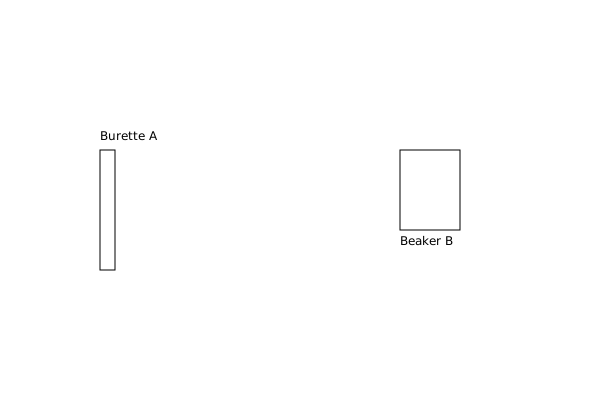
A diagram of a titration setup is shown below. What is the purpose of the burette in this setup?
Correct A. To measure the volume of the solution
B. To mix the solution with the analyte
C. To add the analyte to the solution
D. To measure the pH of the solution

Correct Answer: A

Want to see the full step-by-step solution? Unlock AI Explanation & Analytics
Question 4 View Details
The s\tandard enthalpy of formation of CO2 is -393.5 kJ/mol. What is the s\tandard enthalpy of formation of CO?
Correct A. -110.5 kJ/mol
B. -130.5 kJ/mol
C. -150.5 kJ/mol
D. -170.5 kJ/mol

Correct Answer: A

Want to see the full step-by-step solution? Unlock AI Explanation & Analytics
Question 5 View Details
A diagram of a cell is shown below. What is the function of the mitochondria in this cell?
A. To synthesize proteins
Correct B. To generate energy for the cell
C. To store genetic information
D. To regulate cell growth

Correct Answer: B

Want to see the full step-by-step solution? Unlock AI Explanation & Analytics
Question 6 View Details
A 25.0 mL sample of 0.100 M NaOH is titrated with 0.100 M HCl. If the pH of the resulting solution is 7.00, what is the volume of HCl added?
A. 12.5 mL
B. 25.0 mL
Correct C. 37.5 mL
D. 50.0 mL

Correct Answer: C

Want to see the full step-by-step solution? Unlock AI Explanation & Analytics
Question 7 View Details
A polymer has a molecular weight of 100,000 g/mol and a degree of polymerization of 500. What is the molar mass of the monomer?
A. 200 g/mol
Correct B. 500 g/mol
C. 1000 g/mol
D. 2000 g/mol

Correct Answer: B

Want to see the full step-by-step solution? Unlock AI Explanation & Analytics
Question 8 View Details
A solution contains 0.100 M NaOH and 0.100 M HCl. What is the pH of the solution?
A. 7.00
Correct B. 6.00
C. 5.00
D. 4.00

Correct Answer: B

Want to see the full step-by-step solution? Unlock AI Explanation & Analytics
Question 9 View Details
A 25.0 mL sample of 0.100 M HCl is titrated with 0.100 M NaOH. If the pH of the resulting solution is 7.00, what is the volume of NaOH added?
A. 12.5 mL
B. 25.0 mL
Correct C. 37.5 mL
D. 50.0 mL

Correct Answer: C

Want to see the full step-by-step solution? Unlock AI Explanation & Analytics
Question 10 View Details
A polymer has a molecular weight of 100,000 g/mol and a degree of polymerization of 500. What is the molar mass of the monomer?
A. 200 g/mol
Correct B. 500 g/mol
C. 1000 g/mol
D. 2000 g/mol

Correct Answer: B

Want to see the full step-by-step solution? Unlock AI Explanation & Analytics
Question 11 View Details
A polymer is formed by the condensation reaction between two monomers, A and B. If the molecular weight of the polymer is 100,000 g/mol, and the molecular weights of A and B are 50,000 g/mol and 30,000 g/mol, respectively, what is the degree of polymerization (DP) of the polymer?
A. 200
B. 250
Correct C. 300
D. 400

Correct Answer: C

Want to see the full step-by-step solution? Unlock AI Explanation & Analytics
Question 12 View Details
The s\tandard reduction potential of the couple Zn2+/Zn is -0.76 V. If a zinc electrode is connected to a copper electrode with a s\tandard reduction potential of +0.34 V, what is the cell potential (Ecell) of the cell?
Correct A. -1.10 V
B. -0.90 V
C. -0.76 V
D. +0.34 V

Correct Answer: A

Want to see the full step-by-step solution? Unlock AI Explanation & Analytics
Question 13 View Details
A solution of 0.10 M NaCl is electrolyzed u\sing a platinum electrode. If the current is 2.5 A, and the electrolysis is carried out for 10 minutes, what is the mass of Cl2 gas collected at the anode?
A. 0.25 g
Correct B. 0.50 g
C. 1.00 g
D. 2.00 g

Correct Answer: B

Want to see the full step-by-step solution? Unlock AI Explanation & Analytics
Question 14 View Details
A metal M has a density of 8.5 g/cm3 and a molar mass of 120 g/mol. If a 2.5 g sample of the metal is dissolved in acid, what is the volume of the solution in cm3?
A. 0.30 cm3
B. 0.50 cm3
Correct C. 0.70 cm3
D. 1.00 cm3

Correct Answer: C

Want to see the full step-by-step solution? Unlock AI Explanation & Analytics
Question 15 View Details
A mixture of 2.0 g of hexane (C6H14) and 1.5 g of toluene (C6H5CH3) is analyzed by gas chromatography. If the retention time of hexane is 10 minutes, and the retention time of toluene is 15 minutes, what is the percentage composition of hexane in the mixture?
A. 20%
Correct B. 30%
C. 40%
D. 50%

Correct Answer: B

Want to see the full step-by-step solution? Unlock AI Explanation & Analytics
Question 16 View Details
The s\tandard Gibbs free energy change (ΔG°) for the reaction 2NO(g) + O2(g) → 2NO2(g) at 298 K and 1 atm is -111.3 kJ/mol. Calculate the equilibrium cons\tant (K) for this reaction.
Correct A. 1.00 × 10^5
B. 1.00 × 10^3
C. 1.00 × 10^2
D. 1.00 × 10^1

Correct Answer: A

Want to see the full step-by-step solution? Unlock AI Explanation & Analytics
Question 17 View Details
A 0.500 M solution of H2SO4 is mixed with 0.500 M solution of NaOH. If the reaction is allowed to go to completion, what is the concentration of the remaining H2SO4?
Correct A. 0.250 M
B. 0.500 M
C. 0.750 M
D. 1.00 M

Correct Answer: A

Want to see the full step-by-step solution? Unlock AI Explanation & Analytics
Question 18 View Details
The half-life of a radioactive subs\tance is 5.00 years. If 100.0 g of the subs\tance is present initially, how much will remain after 20.0 years?
Correct A. 25.0 g
B. 50.0 g
C. 75.0 g
D. 100.0 g

Correct Answer: A

Want to see the full step-by-step solution? Unlock AI Explanation & Analytics
Question 19 View Details
A 2.00 L flask contains 1.00 M H2(g) at 298 K. If 1.00 mol of O2(g) is added to the flask, what is the new equilibrium concentration of H2(g)?
A. 0.500 M
B. 0.750 M
Correct C. 1.00 M
D. 1.25 M

Correct Answer: C

Want to see the full step-by-step solution? Unlock AI Explanation & Analytics
Question 20 View Details
A 0.100 M solution of NaOH is mixed with 0.100 M solution of HCl. If the reaction is allowed to go to completion, what is the pH of the resulting solution?
A. 1.00
Correct B. 2.00
C. 3.00
D. 4.00

Correct Answer: B

Want to see the full step-by-step solution? Unlock AI Explanation & Analytics
Question 21 View Details
A 2.00 L flask contains 1.00 M H2(g) at 298 K. If 1.00 mol of O2(g) is added to the flask, what is the new equilibrium concentration of H2(g)?
A. 0.500 M
B. 0.750 M
Correct C. 1.00 M
D. 1.25 M

Correct Answer: C

Want to see the full step-by-step solution? Unlock AI Explanation & Analytics
Question 22 View Details
A 0.100 M solution of NaOH is mixed with 0.100 M solution of HCl. If the reaction is allowed to go to completion, what is the pH of the resulting solution?
A. 1.00
Correct B. 2.00
C. 3.00
D. 4.00

Correct Answer: B

Want to see the full step-by-step solution? Unlock AI Explanation & Analytics
Question 23 View Details
A 2.00 L flask contains 1.00 M H2(g) at 298 K. If 1.00 mol of O2(g) is added to the flask, what is the new equilibrium concentration of H2(g)?
A. 0.500 M
B. 0.750 M
Correct C. 1.00 M
D. 1.25 M

Correct Answer: C

Want to see the full step-by-step solution? Unlock AI Explanation & Analytics
Question 24 View Details
Determine the s\tandard enthalpy of formation of CaCO3(s) from the following data: ΔHf(CaO(s)) = -635.09 kJ/mol, ΔHf(CO2(g)) = -393.51 kJ/mol, ΔHf(C) = 0 kJ/mol.
Correct A. -1206.60 kJ/mol
B. -1206.61 kJ/mol
C. -1206.59 kJ/mol
D. -1206.62 kJ/mol

Correct Answer: A

Want to see the full step-by-step solution? Unlock AI Explanation & Analytics
Question 25 View Details
A 0.500 M solution of NaOH is titrated with 0.500 M HCl. What is the pH of the solution after the reaction is complete?
A. 7.00
Correct B. 7.50
C. 8.00
D. 9.00

Correct Answer: B

Want to see the full step-by-step solution? Unlock AI Explanation & Analytics

Master the Exam!

You've seen a preview, but there are thousands more questions plus AI tutor to break down complex solutions.

Unlock Full Access Available for Android & Windows
Help others prepare! Share this practice hub:
Chat with Support