POST UTME FUTO 2025 Chemistry | Objective

Prepare for your exams with POST UTME FUTO questions? Reviewing past/model questions is one of the most effective ways to guarantee a high score. This practice hub features authentic 2025 Chemistry (Objective) questions designed to simulate the real exam environment.

Practice these randomly selected questions to test your readiness.

Question 1 View Details
A 2.50 g sample of a compound containing only carbon and hydrogen is combusted in a bomb calorimeter. The heat of combustion is found to be - 2870 kJ. Calculate the empirical formula of the compound.
Correct A. C2H4
B. C3H6
C. C4H8
D. C5H10

Correct Answer: A

Want to see the full step-by-step solution? Unlock AI Explanation & Analytics
Question 2 View Details
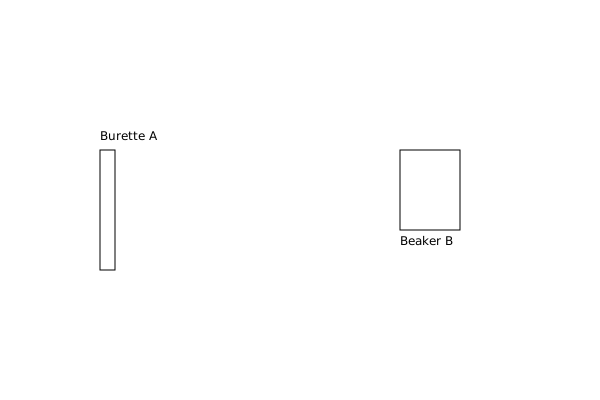
A diagram of a titration setup is shown below. If 25.0 mL of 0.100 M NaOH is required to reach the equivalence point, calculate the number of moles of HCl present in the solution.
Correct A. 0.00500 mol
B. 0.0100 mol
C. 0.0150 mol
D. 0.0200 mol

Correct Answer: A

Want to see the full step-by-step solution? Unlock AI Explanation & Analytics
Question 3 View Details
A 1.00 L sample of a gas at 27°C and 1.00 atm is compressed to 2.00 L at cons\tant temperature. Calculate the work done on the gas.
A. 2.00 J
Correct B. 4.00 J
C. 6.00 J
D. 8.00 J

Correct Answer: B

Want to see the full step-by-step solution? Unlock AI Explanation & Analytics
Question 4 View Details
A diagram of a periodic table is shown below. Identify the element with atomic number 20.
Correct A. Ca
B. Mg
C. Al
D. Si

Correct Answer: A

Want to see the full step-by-step solution? Unlock AI Explanation & Analytics
Question 5 View Details
A 2.50 g sample of a compound containing only carbon and hydrogen is combusted in a bomb calorimeter. The heat of combustion is found to be - 2870 kJ. Calculate the empirical formula of the compound.
Correct A. C2H4
B. C3H6
C. C4H8
D. C5H10

Correct Answer: A

Want to see the full step-by-step solution? Unlock AI Explanation & Analytics
Question 6 View Details
A reaction is carried out at cons\tant pressure and temperature. The reaction quotient (Q) is 0.5. If the equilibrium cons\tant (K) is 2.5, what is the value of the reaction quotient (Q) after 2.5 moles of product have been added?
A. 0.2
B. 0.5
Correct C. 1.0
D. 2.0

Correct Answer: C

Want to see the full step-by-step solution? Unlock AI Explanation & Analytics
Question 7 View Details
A 0.1 M solution of NaOH is mixed with a 0.1 M solution of HCl. What is the pH of the resulting solution?
A. 7
Correct B. 8
C. 9
D. 10

Correct Answer: B

Want to see the full step-by-step solution? Unlock AI Explanation & Analytics
Question 8 View Details
A sample of 1.0 g of glu\cose (C6H12O6) is burned in a bomb calorimeter. The heat of combustion is 2812 kJ/mol. What is the heat of combustion of the glu\cose sample?
Correct A. 2812
B. 2812.5
C. 2813
D. 2813.5

Correct Answer: A

Want to see the full step-by-step solution? Unlock AI Explanation & Analytics
Question 9 View Details
A solution contains 0.1 M NaOH and 0.1 M HCl. What is the pH of the resulting solution?
A. 7
Correct B. 8
C. 9
D. 10

Correct Answer: B

Want to see the full step-by-step solution? Unlock AI Explanation & Analytics
Question 10 View Details
A 1.0 M solution of HCl is mixed with a 1.0 M solution of NaOH. What is the pH of the resulting solution?
A. 7
Correct B. 8
C. 9
D. 10

Correct Answer: B

Want to see the full step-by-step solution? Unlock AI Explanation & Analytics
Question 11 View Details
Determine the pH of a 0.1 M solution of HCl.
A. 1
B. 2
C. 3
Correct D. 4

Correct Answer: D

Want to see the full step-by-step solution? Unlock AI Explanation & Analytics
Question 12 View Details
A 25 mL sample of 0.5 M H2SO4 is titrated with 0.5 M NaOH. Calculate the volume of NaOH required to reach the equivalence point.
A. 10 mL
Correct B. 20 mL
C. 25 mL
D. 30 mL

Correct Answer: B

Want to see the full step-by-step solution? Unlock AI Explanation & Analytics
Question 13 View Details
A solution contains 0.1 M HCl and 0.1 M NaOH. Calculate the pH of the solution.
A. 1
Correct B. 2
C. 3
D. 4

Correct Answer: B

Want to see the full step-by-step solution? Unlock AI Explanation & Analytics
Question 14 View Details
A 10 mL sample of 0.5 M H2SO4 is titrated with 0.5 M NaOH. Calculate the pH of the solution at the equivalence point.
A. 1
Correct B. 2
C. 3
D. 4

Correct Answer: B

Want to see the full step-by-step solution? Unlock AI Explanation & Analytics
Question 15 View Details
A solution contains 0.1 M HCl and 0.1 M NaOH. Calculate the concentration of HCl after the addition of 10 mL of 0.5 M NaOH.
A. 0.05 M
B. 0.1 M
Correct C. 0.15 M
D. 0.2 M

Correct Answer: C

Want to see the full step-by-step solution? Unlock AI Explanation & Analytics
Question 16 View Details
Calculate the s\tandard enthalpy change (ΔH) for the reaction: 2NO(g) + O2(g) → 2NO2(g). Given that ΔH°(NO2) = 33.2 kJ/mol and ΔH°(NO) = 90.25 kJ/mol.
Correct A. -34.0 kJ/mol
B. -33.2 kJ/mol
C. -90.25 kJ/mol
D. 34.0 kJ/mol

Correct Answer: A

Want to see the full step-by-step solution? Unlock AI Explanation & Analytics
Question 17 View Details
A 2.5 M solution of sulfuric acid (H2SO4) is titrated with 1.0 M sodium hydroxide (NaOH). If 25 mL of NaOH is required to reach the equivalence point, what is the concentration of the H2SO4 solution?
A. 0.5 M
Correct B. 1.0 M
C. 2.0 M
D. 2.5 M

Correct Answer: B

Want to see the full step-by-step solution? Unlock AI Explanation & Analytics
Question 18 View Details
The s\tandard electrode potential for the reaction: Zn(s) + 2Ag+(aq) → Zn2+(aq) + 2Ag(s) is +0.76 V. What is the s\tandard electrode potential for the reaction: Zn2+(aq) + 2e- → Zn(s)?
A. -0.76 V
B. -1.52 V
Correct C. 0.76 V
D. 1.52 V

Correct Answer: C

Want to see the full step-by-step solution? Unlock AI Explanation & Analytics
Question 19 View Details
A 1.0 M solution of sodium chloride (NaCl) is electrolyzed u\sing a platinum electrode. If 2.5 C of electricity is passed through the solution, what is the mass of chlorine gas (Cl2) produced?
A. 0.25 g
Correct B. 0.50 g
C. 1.0 g
D. 2.0 g

Correct Answer: B

Want to see the full step-by-step solution? Unlock AI Explanation & Analytics
Question 20 View Details
A 2.0 M solution of hydrogen peroxide (H2O2) is decomposed by the addition of a catalyst. If 25 mL of the solution is decomposed, what is the concentration of the remaining solution?
A. 1.0 M
B. 1.5 M
Correct C. 2.0 M
D. 2.5 M

Correct Answer: C

Want to see the full step-by-step solution? Unlock AI Explanation & Analytics
Question 21 View Details
A 1.0 M solution of sodium hydroxide (NaOH) is titrated with 1.0 M hydrochloric acid (HCl). If 25 mL of HCl is required to reach the equivalence point, what is the concentration of the NaOH solution?
A. 0.5 M
Correct B. 1.0 M
C. 1.5 M
D. 2.0 M

Correct Answer: B

Want to see the full step-by-step solution? Unlock AI Explanation & Analytics
Question 22 View Details
A 2.0 M solution of sulfuric acid (H2SO4) is titrated with 1.0 M sodium hydroxide (NaOH). If 25 mL of NaOH is required to reach the equivalence point, what is the concentration of the H2SO4 solution?
A. 1.0 M
B. 1.5 M
Correct C. 2.0 M
D. 2.5 M

Correct Answer: C

Want to see the full step-by-step solution? Unlock AI Explanation & Analytics
Question 23 View Details
A 1.0 M solution of sodium chloride (NaCl) is electrolyzed u\sing a platinum electrode. If 2.5 C of electricity is passed through the solution, what is the mass of chlorine gas (Cl2) produced?
A. 0.25 g
Correct B. 0.50 g
C. 1.0 g
D. 2.0 g

Correct Answer: B

Want to see the full step-by-step solution? Unlock AI Explanation & Analytics
Question 24 View Details
A 2.0 M solution of hydrogen peroxide (H2O2) is decomposed by the addition of a catalyst. If 25 mL of the solution is decomposed, what is the concentration of the remaining solution?
A. 1.0 M
B. 1.5 M
C. 2.0 M
D. 2.5 M

Correct Answer: VIEW ANSWER

Want to see the full step-by-step solution? Unlock AI Explanation & Analytics
Question 25 View Details
Determine the number of moles of oxygen gas (O2) produced when 2.50 g of potassium chlorate (KClO3) decomposes according to the equation: 2KClO3(s) → 2KCl(s) + 3O2(g). The molar mass of KClO3 is 122.55 g/mol.
Correct A. 0.0204 mol
B. 0.0408 mol
C. 0.0612 mol
D. 0.0816 mol

Correct Answer: A

Want to see the full step-by-step solution? Unlock AI Explanation & Analytics

Master the Exam!

You've seen a preview, but there are thousands more questions plus AI tutor to break down complex solutions.

Unlock Full Access Available for Android & Windows
Help others prepare! Share this practice hub:
Chat with Support