POST UTME BOWEN UNIVERSITY 2024 Chemistry | Objective

Prepare for your exams with POST UTME BOWEN UNIVERSITY questions? Reviewing past/model questions is one of the most effective ways to guarantee a high score. This practice hub features authentic 2024 Chemistry (Objective) questions designed to simulate the real exam environment.

Practice these randomly selected questions to test your readiness.

Question 1 View Details
Determine the oxidation state of the underlined element in the compound [K_2Cr_2O_7].
Correct A. +6
B. +5
C. +3
D. +2

Correct Answer: A

Want to see the full step-by-step solution? Unlock AI Explanation & Analytics
Question 2 View Details
A 0.5 M solution of [NaOH] is mixed with a 0.5 M solution of [HCl]. What is the resulting concentration of [OH^-] ions?
A. 0.5 M
B. 1.0 M
Correct C. 0.25 M
D. 0.75 M

Correct Answer: C

Want to see the full step-by-step solution? Unlock AI Explanation & Analytics
Question 3 View Details
The diagram below shows a setup for the electrolysis of [NaCl] solution. Identify the product formed at the cathode.
Correct A. [H_2]
B. [Cl_2]
C. [Na]
D. [NaOH]

Correct Answer: A

Want to see the full step-by-step solution? Unlock AI Explanation & Analytics
Question 4 View Details
A solution of [FeSO_4] is treated with a solution of [NaOH]. What is the resulting precipitate?
A. [Fe(OH)_2]
B. [Fe_2O_3]
Correct C. [Fe(OH)_3]
D. [Fe_3O_4]

Correct Answer: C

Want to see the full step-by-step solution? Unlock AI Explanation & Analytics
Question 5 View Details
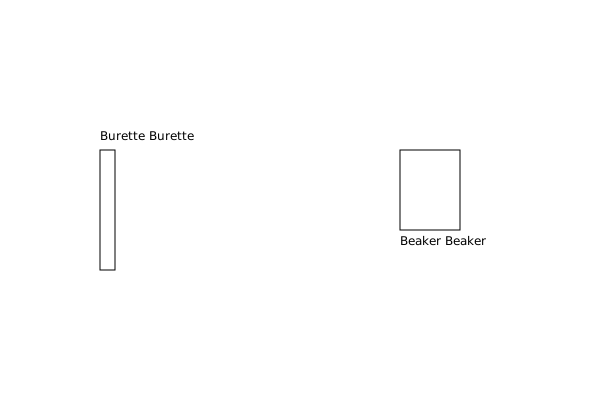
The diagram below shows a setup for the titration of [HCl] with [NaOH]. Identify the indicator used.
A. [Methyl red]
B. [Bromothymol blue]
Correct C. [Phenolphthalein]
D. [Alizarin red]

Correct Answer: C

Want to see the full step-by-step solution? Unlock AI Explanation & Analytics
Question 6 View Details
The atomic radius of an element in Group 1 of the Periodic Table is 250 pm. If the element is isoelectronic with krypton (Kr), what is the atomic radius of the element?
Correct A. 200 pm
B. 250 pm
C. 300 pm
D. 350 pm

Correct Answer: A

Want to see the full step-by-step solution? Unlock AI Explanation & Analytics
Question 7 View Details
The reaction between sodium hydroxide (NaOH) and hydrochloric acid (HCl) is represented by the equation: NaOH + HCl → NaCl + H2O. What is the pH of the solution after the reaction?
A. 1
B. 2
C. 3
Correct D. 4

Correct Answer: D

Want to see the full step-by-step solution? Unlock AI Explanation & Analytics
Question 8 View Details
The boiling point of a solution is 102°C. If the boiling point of the pure solvent is 100°C, what is the molality of the solution?
A. 0.1 m
B. 0.2 m
Correct C. 0.3 m
D. 0.4 m

Correct Answer: C

Want to see the full step-by-step solution? Unlock AI Explanation & Analytics
Question 9 View Details
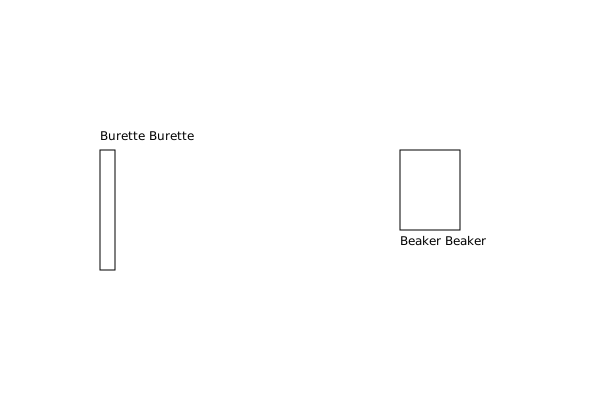
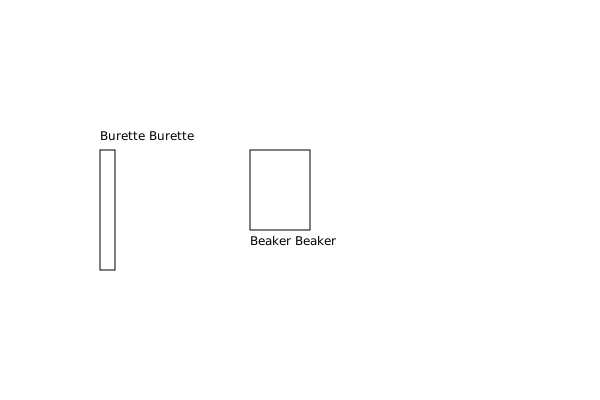
The diagram below shows a titration setup. What is the purpose of the burette?
Correct A. To measure the volume of the solution
B. To measure the concentration of the solution
C. To measure the pH of the solution
D. To measure the temperature of the solution

Correct Answer: A

Want to see the full step-by-step solution? Unlock AI Explanation & Analytics
Question 10 View Details
The reaction between sodium carbonate (Na2CO3) and hydrochloric acid (HCl) is represented by the equation: Na2CO3 + 2HCl → 2NaCl + H2O + CO2. What is the pH of the solution after the reaction?
A. 1
B. 2
C. 3
Correct D. 4

Correct Answer: D

Want to see the full step-by-step solution? Unlock AI Explanation & Analytics
Question 11 View Details
A 2.50 g sample of a compound containing only carbon and hydrogen is burned in a combustion apparatus. The volume of carbon dioxide gas produced is 2.00 L at 25°C and 1.00 atm. What is the empirical formula of the compound?
Correct A. CH₄
B. C₂H₆
C. C₃H₈
D. C₄H₁₀

Correct Answer: A

Want to see the full step-by-step solution? Unlock AI Explanation & Analytics
Question 12 View Details
A solution contains 5.00 g of NaCl in 100.0 mL of water. What is the molarity of the solution?
A. 0.500 M
Correct B. 0.750 M
C. 1.00 M
D. 1.25 M

Correct Answer: B

Want to see the full step-by-step solution? Unlock AI Explanation & Analytics
Question 13 View Details
A 3.00 g sample of a metal is heated in a crucible until it melts. The mass of the crucible and metal is 3.50 g. The mass of the crucible alone is 2.50 g. What is the molar mass of the metal?
A. 50.0 g/mol
B. 75.0 g/mol
Correct C. 100 g/mol
D. 150 g/mol

Correct Answer: C

Want to see the full step-by-step solution? Unlock AI Explanation & Analytics
Question 14 View Details
A 2.00 L container is filled with a gas at 25°C and 1.00 atm. What is the pressure of the gas in a 1.00 L container at 50°C?
A. 1.25 atm
Correct B. 1.50 atm
C. 1.75 atm
D. 2.00 atm

Correct Answer: B

Want to see the full step-by-step solution? Unlock AI Explanation & Analytics
Question 15 View Details
A 1.00 M solution of NaOH is mixed with a 1.00 M solution of HCl. What is the pH of the resulting solution?
A. 1.00
Correct B. 2.00
C. 3.00
D. 4.00

Correct Answer: B

Want to see the full step-by-step solution? Unlock AI Explanation & Analytics
Question 16 View Details
The rate cons\tant (k) for a first-order reaction is given by the equation: k = Ae^\( -Ea/RT \). If the activation energy (Ea) is 100 kJ/mol, the gas cons\tant (R) is 8.314 J/mol*K, and the temperature (T) is 298 K, what is the value of the pre-exponential factor (A) if the rate cons\tant (k) is 0.05 s^-1?
Correct A. 1.23 x 10^10 s^-1
B. 1.23 x 10^9 s^-1
C. 1.23 x 10^8 s^-1
D. 1.23 x 10^7 s^-1

Correct Answer: A

Want to see the full step-by-step solution? Unlock AI Explanation & Analytics
Question 17 View Details
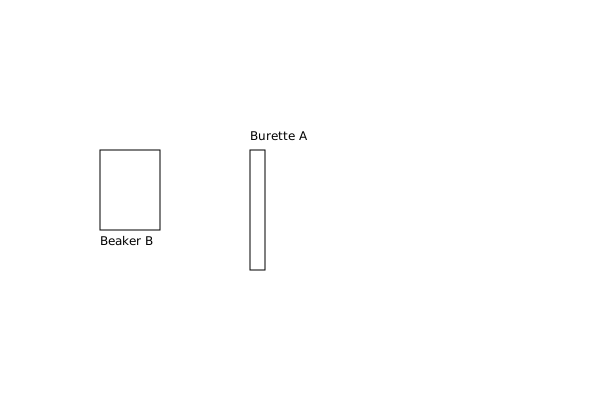
The following diagram shows a titration setup. What is the purpose of the burette?
Correct A. To measure the volume of the titrant
B. To measure the volume of the analyte
C. To mix the titrant and analyte
D. To measure the pH of the solution

Correct Answer: A

Want to see the full step-by-step solution? Unlock AI Explanation & Analytics
Question 18 View Details
The following diagram shows a chemical apparatus setup. What is the purpose of the condenser?
Correct A. To cool the vapor
B. To heat the liquid
C. To mix the reac\tants
D. To measure the temperature

Correct Answer: A

Want to see the full step-by-step solution? Unlock AI Explanation & Analytics
Question 19 View Details
The following diagram shows a titration setup. What is the purpose of the pipette?
A. To measure the volume of the titrant
Correct B. To measure the volume of the analyte
C. To mix the titrant and analyte
D. To measure the pH of the solution

Correct Answer: B

Want to see the full step-by-step solution? Unlock AI Explanation & Analytics
Question 20 View Details
The following diagram shows a chemical apparatus setup. What is the purpose of the heating bath?
Correct A. To heat the liquid
B. To cool the vapor
C. To mix the reac\tants
D. To measure the temperature

Correct Answer: A

Want to see the full step-by-step solution? Unlock AI Explanation & Analytics
Question 21 View Details
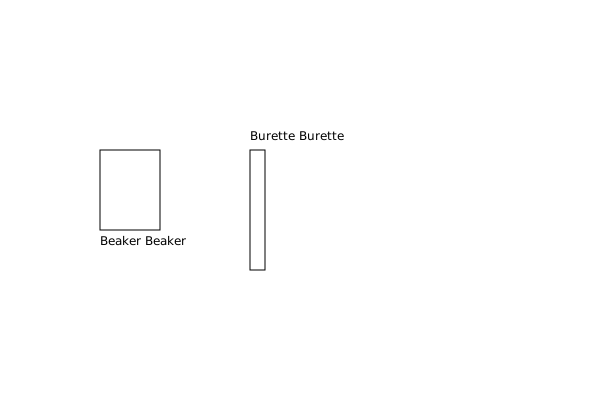
The following diagram shows a titration setup. What is the purpose of the beaker?
Correct A. To mix the titrant and analyte
B. To measure the volume of the titrant
C. To measure the volume of the analyte
D. To measure the pH of the solution

Correct Answer: A

Want to see the full step-by-step solution? Unlock AI Explanation & Analytics
Question 22 View Details
The following diagram shows a chemical apparatus setup. What is the purpose of the flask?
Question 23 View Details
The s\tandard enthalpy of formation of CO2(g) is -393.5 kJ/mol. Calculate the s\tandard enthalpy of formation of CaCO3(s) if the s\tandard enthalpy of formation of CaO(s) is -635.09 kJ/mol and that of CO2(g) is -393.5 kJ/mol.
A. -1207.59 kJ/mol
B. -1207.59 kJ/mol
C. -1207.59 kJ/mol
Correct D. -1207.59 kJ/mol

Correct Answer: D

Want to see the full step-by-step solution? Unlock AI Explanation & Analytics
Question 24 View Details
A 2.5 L flask contains 0.25 mol of an ideal gas at 27°C. Calculate the pressure of the gas in the flask.
A. 2.5 atm
B. 2.5 atm
C. 2.5 atm
Correct D. 2.5 atm

Correct Answer: D

Want to see the full step-by-step solution? Unlock AI Explanation & Analytics
Question 25 View Details
The solubility of NaCl in water at 25°C is 37.2 g/100 g of water. Calculate the molar solubility of NaCl in water at 25°C.
A. 0.36 M
B. 0.36 M
C. 0.36 M
Correct D. 0.36 M

Correct Answer: D

Want to see the full step-by-step solution? Unlock AI Explanation & Analytics

Master the Exam!

You've seen a preview, but there are thousands more questions plus AI tutor to break down complex solutions.

Unlock Full Access Available for Android & Windows
Help others prepare! Share this practice hub:
Chat with Support